“Cubes in Space” is a global Science, Technology, Engineering, and Mathematics (STEM) program sponsored by iEDU in collaboration with NASA for students ages 11-18. They aim to allow students to design and test experiments – small enough to fit in 4 cm cubes – by launching them in a sounding rocket and a super-pressure balloon.
In 2020, Deborah Quail-Blier, who teaches the Program for Gifted Learners (PGL) at St. Brother André Catholic Elementary School, contacted Professor Paul Mayer, the Director of the uOttawa John L. Holmes Mass Spectrometry Facility, to ask for his assistance in her students’ search for scientific answers. Professor Mayer, who is extensively involved in STEM education for youth, enthusiastically agreed to help.
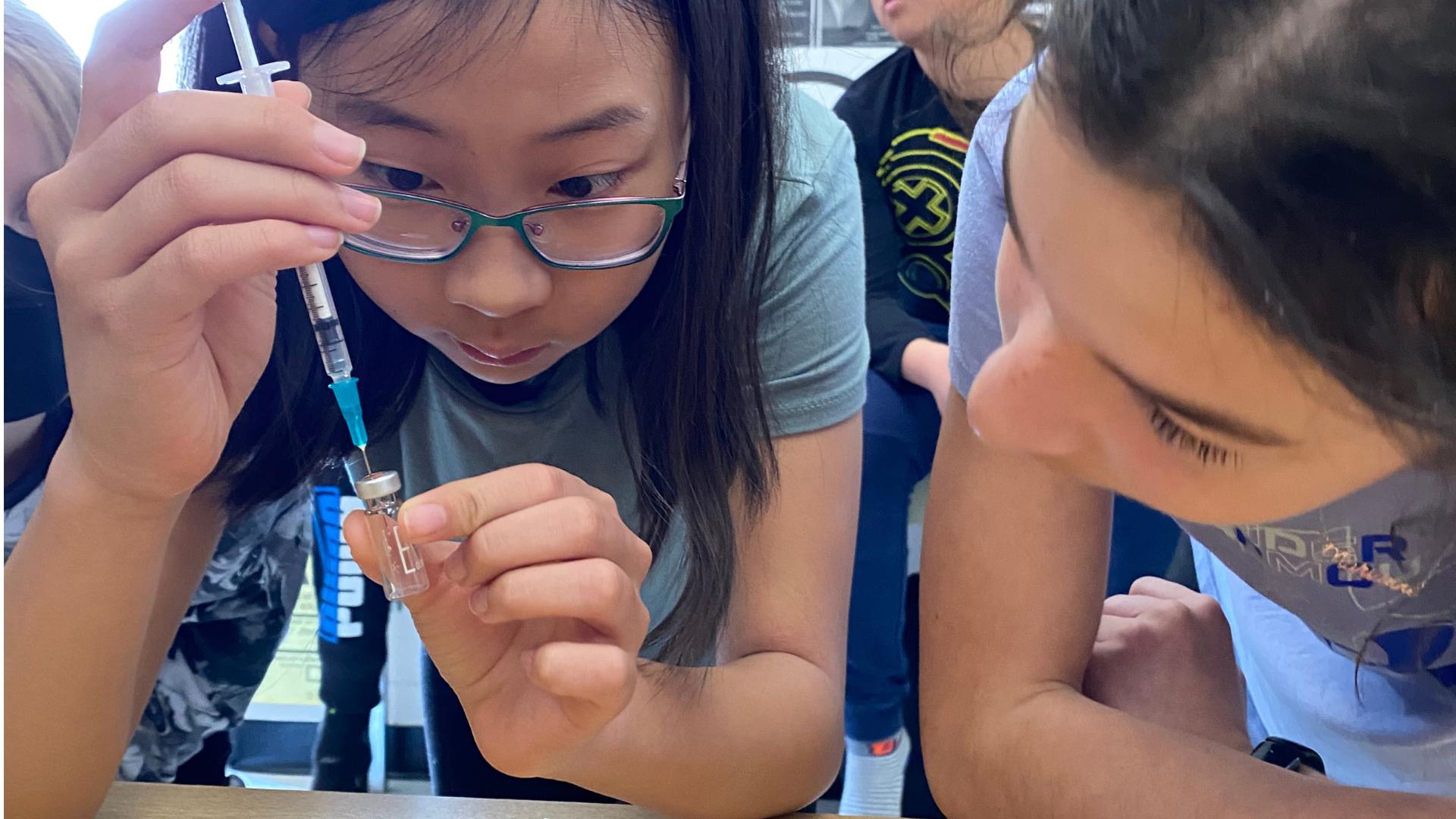
By 2022, the students had researched the usability of EpiPens for astronauts who suffer from allergies during spaceflight. They conducted experiments to determine the effect of cosmic radiation on epinephrine, a medication used to save lives during allergic reactions. Their research led to a groundbreaking discovery: EpiPens are ineffective in space without new protective measures. The results of their study have the potential to contribute to medical advancements in the future.
The students hope to continue their research, find a way to protect epinephrine and EpiPens in space, and engineer a capsule that could preserve the epinephrine and EpiPen solution to keep it from becoming unusable.
The students’ findings have not only assisted them in comprehending the impact of cosmic radiation on epinephrine but also have practical applications for space exploration and the security of astronauts. Ultimately, science and social justice converged as the students became enthusiastic about how science can drive change and contribute to making the world a better place.